- Le Bulletin.net
- Comparer
- Galaxy A50 vs Redmi Note 5 Pro
Samsung Galaxy A50 vs Xiaomi Redmi Note 5 Pro
Ce que le Galaxy A50 fait mieux (16) et où le Redmi Note 5 Pro l’emporte (1) — toutes les caractéristiques côte à côte.
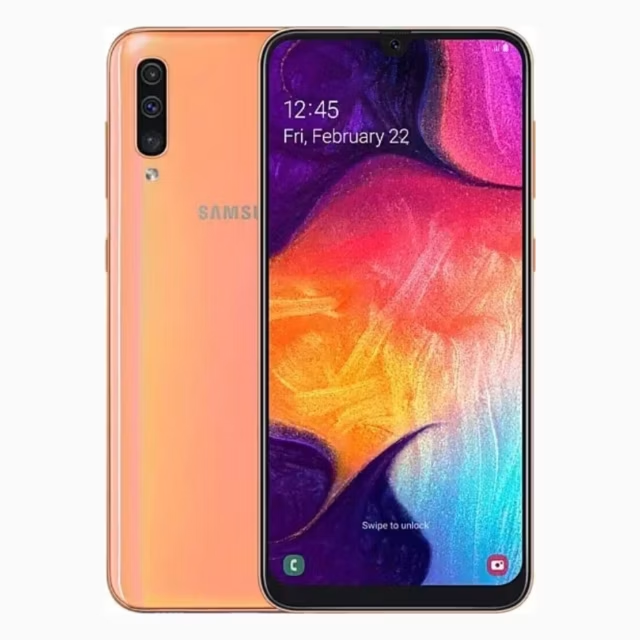
vs

6,0Écran4,1
3,7Performances3,0
6,3Photo4,3
2,8Batterie3,1
5,2Équipement4,1
Dimensions
Comparaison des tailles
Galaxy A50Redmi Note 5 Pro
| Galaxy A50 | Redmi Note 5 Pro | Écart | |
|---|---|---|---|
| Hauteur | 158,5 mm | 158,6 mm | −0,1 mm |
| Largeur | 74,7 mm | 75,4 mm | −0,7 mm |
| Épaisseur | 7,7 mm | 8,1 mm | −0,4 mm |
| Poids | 166 g | 181 g | −15 g |
À la même échelle d’après les dimensions officielles (face et profil).
Pourquoi le Galaxy A50 est-il meilleur que le Redmi Note 5 Pro ?
- Capteur principal25 MP vs 12 MP2,1×
- Score AnTuTu144 574 vs 107 737+34 %
- Dalle OLEDOui · Redmi Note 5 Pro: Non
- Stockage (max.)128 Go vs 64 Go2×
- NFCOui · Redmi Note 5 Pro: Non
- Geekbench 6 (multicœur)5 396 vs 4 696+15 %
- Fréquence CPU2,3 GHz vs 1,8 GHz+28 %
- Capteurs arrière2 vs 12×
- Ultra grand-angleOui · Redmi Note 5 Pro: Non
- Poids166 g vs 181 g+9 %
- Taille de l’écran6,4″ vs 6″+7 %
- Gravure10 nm vs 14 nm+40 %
Pourquoi le Redmi Note 5 Pro est-il meilleur que le Galaxy A50 ?
- Charge filaire18 W vs 15 W+20 %
Caractéristiques
Côte à côte
| Design | ||
| Poids | 166 g | 181 g |
| Épaisseur | 7,7 mm | 8,1 mm |
| Hauteur | 158,5 mm | 158,6 mm |
| Largeur | 74,7 mm | 75,4 mm |
| Châssis | Plastique | Aluminium |
| Dos | Plastique | Aluminium |
| Protection du verre | Corning Gorilla Glass 3 | Corning Gorilla Glass (unspecified version) |
| Coloris | Noir, Blanc, Bleu, Coral | Noir, Or champagne, Or rose, Lake Blue |
| Écran | ||
| Taille de l’écran | 6,4″ | 6″ |
| Dalle | Super AMOLED | IPS LCD |
| Dalle OLED | Oui | Non |
| Définition (largeur) | 1 080 px | 1 080 px |
| Définition (hauteur) | 2 340 px | 2 160 px |
| Densité de pixels | 403 ppi | 403 ppi |
| Fréquence de rafraîchissement | 60 Hz | 60 Hz |
| Luminosité maximale | 650 nits | — |
| Luminosité mesurée | 551 nits | — |
| Ratio écran/façade | 84,9 % | 77,4 % |
| Performances | ||
| Puce | Exynos 9610 | Qualcomm SDM636 Snapdragon 636 |
| Fabricant de la puce | Exynos | Qualcomm |
| Gravure | 10 nm | 14 nm |
| Cœurs CPU | 8 | 8 |
| Fréquence CPU | 2,3 GHz | 1,8 GHz |
| GPU | Mali-G72 MP3 | Adreno 509 |
| Score AnTuTu | 144 574 | 107 737 |
| Geekbench 6 (multicœur) | 5 396 | 4 696 |
| Mémoire | ||
| RAM | 6 Go | 6 Go |
| Stockage (max.) | 128 Go | 64 Go |
| Stockage (de base) | 64 Go | 64 Go |
| Type de stockage | UFS 2.1 | eMMC 5.1 |
| Port carte mémoire | Oui | Oui |
| Photo | ||
| Capteur principal | 25 MP | 12 MP |
| Ouverture (principal) | f/1,7 | f/2,2 |
| Taille du capteur principal | 1/2.78" | 1/2.9" |
| Capteurs arrière | 2 | 1 |
| Stabilisation optique | Non | Non |
| Ultra grand-angle | Oui | Non |
| Téléobjectif | Non | Non |
| Vidéo max. | 1080p | 1080p |
| Caméra selfie | 25 MP | 20 MP |
| Selfie vidéo 4K | Non | Non |
| Batterie | ||
| Capacité de la batterie | 4 000 mAh | 4 000 mAh |
| Type de batterie | Li-Po | Li-Po |
| Charge filaire | 15 W | 18 W |
| Charge en 30 min | 34 % | — |
| Charge sans fil | Non | Non |
| Connectivité | ||
| 5G | Non | — |
| eSIM | Non | Non |
| Double SIM | Oui | Oui |
| Norme Wi-Fi | Wi-Fi 5 | Wi-Fi 5 |
| Bluetooth | 5 | 5 |
| NFC | Oui | Non |
| USB | USB Type-C 2.0 | microUSB 2.0 |
| Version USB | 2 | — |
| Navigation par satellite | GLONASS, GALILEO, BDS | GLONASS, BDS |
| Fonctions | ||
| Haut-parleurs stéréo | Non | Non |
| Prise jack 3,5 mm | Oui | Oui |
| Lecteur d’empreintes | Sous l’écran | Au dos |
| Capteurs | Empreinte digitale (sous l’écran, optique), accéléromètre, gyroscope, proximité, boussole | Empreinte digitale (au dos), accéléromètre, gyroscope, proximité, boussole |
| DAS (tête) | 0,27 W/kg | 1,19 W/kg |
| DAS tronc mesuré par l’ANFR | 1,06 W/kg | — |
| Distance de mesure du DAS tronc (ANFR) | 5 mm | — |
| Conforme au contrôle DAS de l’ANFR | Oui | — |
| Contrôle DAS de l’ANFR (année) | 2019 | — |
| Logiciel | ||
| Système au lancement | Android 9.0 (Pie) | Android 7.1.2 (Nougat) |
| Plateforme | Android | Android |
| Surcouche | One UI 3.0 | MIUI 11 |