- Le Bulletin.net
- Comparer
- Note 40 Pro 4G vs Y300 Pro
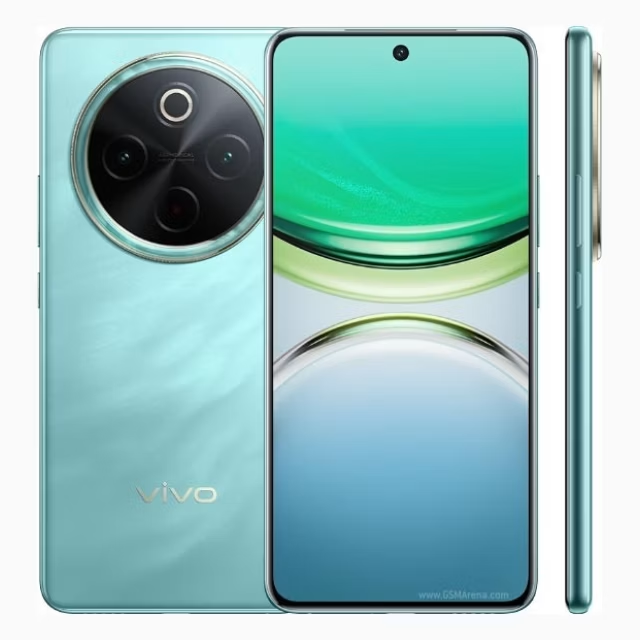
Infinix Note 40 Pro 4G vs Vivo Y300 Pro
Ce que le Note 40 Pro 4G fait mieux (9) et où le Y300 Pro l’emporte (6) — toutes les caractéristiques côte à côte.
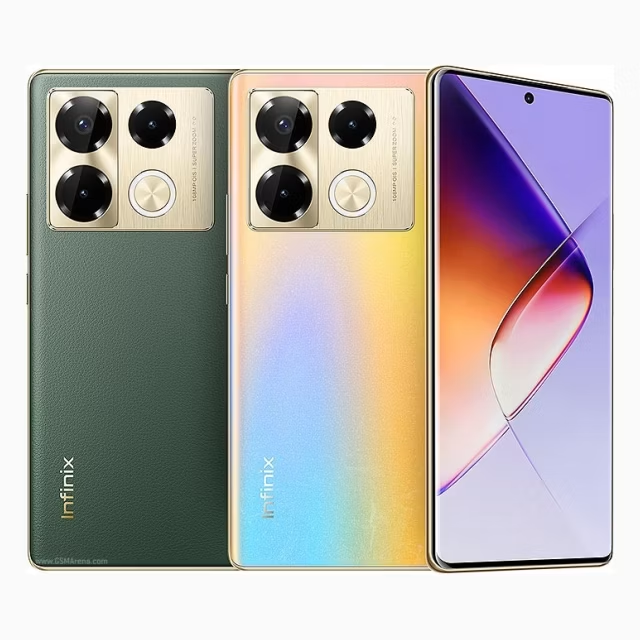
vs
8,4Écran9,2
8,1Photo6,4
7,8Batterie9,1
6,4Équipement4,7
Dimensions
Comparaison des tailles
Note 40 Pro 4GY300 Pro
| Note 40 Pro 4G | Y300 Pro | Écart | |
|---|---|---|---|
| Hauteur | 164,4 mm | 163,4 mm | +1 mm |
| Largeur | 74,6 mm | 76,4 mm | −1,8 mm |
| Épaisseur | 7,8 mm | 7,7 mm | +0,1 mm |
| Poids | 190 g | 194 g | −4 g |
À la même échelle d’après les dimensions officielles (face et profil).
Pourquoi le Note 40 Pro 4G est-il meilleur que le Y300 Pro ?
- Capteur principal108 MP vs 50 MP2,2×
- Stabilisation optiqueOui · Y300 Pro: Non
- Charge sans filOui · Y300 Pro: Non
- NFCOui · Y300 Pro: Non
- Haut-parleurs stéréoOui · Y300 Pro: Non
- Capteurs arrière3 vs 13×
- Stockage (de base)256 Go vs 128 Go2×
- Port carte mémoireOui · Y300 Pro: Non
- Poids190 g vs 194 g+2 %
Pourquoi le Y300 Pro est-il meilleur que le Note 40 Pro 4G ?
- Luminosité maximale1 300 nits vs 5 000 nits3,8×
- Capacité de la batterie5 000 mAh vs 6 500 mAh+30 %
- Stockage (max.)256 Go vs 512 Go2×
- Charge filaire70 W vs 80 W+14 %
- Étanchéité (IPx)IPx4 vs IPx5+25 %
- Vidéo max.1080p vs 4K
Caractéristiques
Côte à côte
| Design | ||
| Poids | 190 g | 194 g |
| Épaisseur | 7,8 mm | 7,7 mm |
| Hauteur | 164,4 mm | 163,4 mm |
| Largeur | 74,6 mm | 76,4 mm |
| Indice de protection | IP54 | IP65 |
| Étanchéité (IPx) | IPx4 | IPx5 |
| Protection du verre | Corning Gorilla Glass | — |
| Coloris | Vintage Green, Titan Gold, Racing Edition | Black, Ocean Blue, Titanium, White |
| Écran | ||
| Taille de l’écran | 6,8″ | 6,8″ |
| Dalle | AMOLED | AMOLED |
| Dalle OLED | Oui | Oui |
| Définition (largeur) | 1 080 px | 1 080 px |
| Définition (hauteur) | 2 436 px | 2 392 px |
| Densité de pixels | 393 ppi | 388 ppi |
| Fréquence de rafraîchissement | 120 Hz | 120 Hz |
| Luminosité maximale | 1 300 nits | 5 000 nits |
| Ratio écran/façade | 89,6 % | 88,8 % |
| Performances | ||
| Puce | Mediatek Helio G99 Ultimate | Qualcomm SM6450 Snapdragon 6 Gen 1 |
| Fabricant de la puce | MediaTek | Qualcomm |
| Gravure | — | 4 nm |
| Cœurs CPU | 8 | 8 |
| Fréquence CPU | 2,2 GHz | 2,2 GHz |
| GPU | Mali-G57 MC2 | Adreno 710 |
| Mémoire | ||
| RAM | 12 Go | 12 Go |
| Stockage (max.) | 256 Go | 512 Go |
| Stockage (de base) | 256 Go | 128 Go |
| Type de stockage | UFS 2.2 | UFS 2.2 |
| Port carte mémoire | Oui | Non |
| Photo | ||
| Capteur principal | 108 MP | 50 MP |
| Ouverture (principal) | f/1,8 | f/1,8 |
| Taille du capteur principal | 1/1.67" | 1/1.95" |
| Capteurs arrière | 3 | 1 |
| Stabilisation optique | Oui | Non |
| Ultra grand-angle | Non | Non |
| Téléobjectif | Non | Non |
| Vidéo max. | 1080p | 4K |
| Cadence vidéo 4K | — | 30 fps |
| Caméra selfie | 32 MP | 32 MP |
| Selfie vidéo 4K | Non | Non |
| Batterie | ||
| Capacité de la batterie | 5 000 mAh | 6 500 mAh |
| Charge filaire | 70 W | 80 W |
| Charge en 30 min | 75 % | — |
| Charge sans fil | Oui | Non |
| Puissance sans fil | 20 W | — |
| Charge sans fil inversée | Oui | — |
| Connectivité | ||
| 5G | — | Oui |
| eSIM | Non | Non |
| Double SIM | Oui | Oui |
| Norme Wi-Fi | Wi-Fi 5 | Wi-Fi 5 |
| Bluetooth | — | 5,1 |
| NFC | Oui | Non |
| USB | USB Type-C 2.0 | USB Type-C 2.0 |
| Version USB | 2 | 2 |
| Navigation par satellite | — | GLONASS, GALILEO, BDS, QZSS |
| Fonctions | ||
| Haut-parleurs stéréo | Oui | Non |
| Prise jack 3,5 mm | Non | Non |
| Lecteur d’empreintes | Sous l’écran | Sous l’écran |
| Capteurs | Fingerprint (under display, optical), accelerometer, gyro, proximity, compass | Fingerprint (under display, optical), accelerometer, gyro, proximity, compass |
| Logiciel | ||
| Système au lancement | Android 14 | Android 14 |
| Plateforme | Android | Android |
| Surcouche | XOS 14 | OriginOS 4 |