- Le Bulletin.net
- Comparer
- Note 30 VIP vs Narzo 60 Pro
Infinix Note 30 VIP vs Realme Narzo 60 Pro
Ce que le Note 30 VIP fait mieux (8) et où le Narzo 60 Pro l’emporte (5) — toutes les caractéristiques côte à côte.
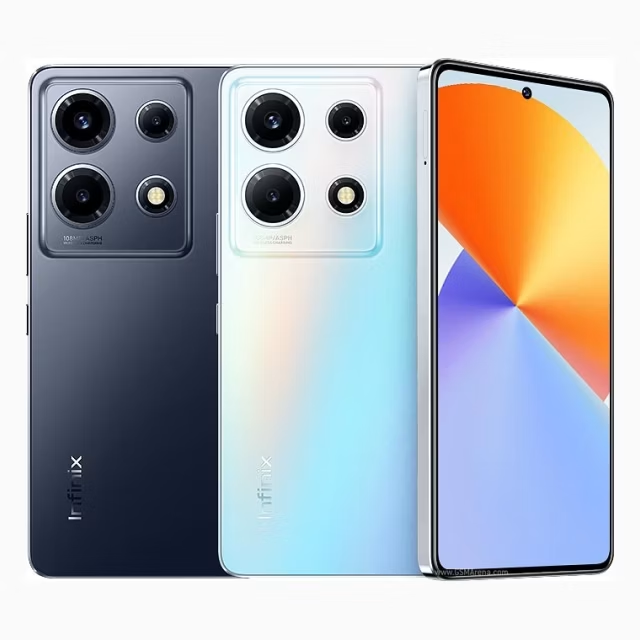
vs
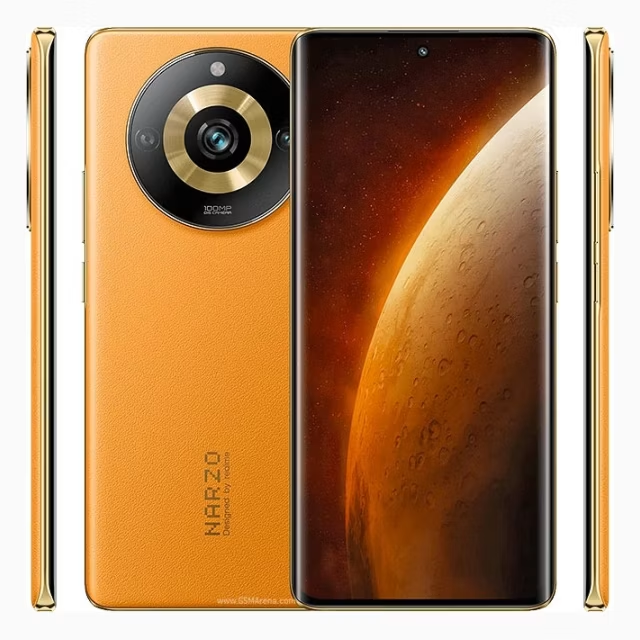
7,6Écran7,6
7,0Photo7,9
8,2Batterie7,2
6,9Équipement8,7
Dimensions
Comparaison des tailles
Note 30 VIPNarzo 60 Pro
| Note 30 VIP | Narzo 60 Pro | Écart | |
|---|---|---|---|
| Hauteur | 162,7 mm | 161,6 mm | +1,1 mm |
| Largeur | 75,9 mm | 73,9 mm | +2 mm |
| Épaisseur | 8,2 mm | 8,2 mm | = |
| Poids | 190 g | 185 g | +5 g |
À la même échelle d’après les dimensions officielles (face et profil).
Pourquoi le Note 30 VIP est-il meilleur que le Narzo 60 Pro ?
- Charge sans filOui · Narzo 60 Pro: Non
- Capteurs arrière3 vs 13×
- Capteur principal108 MP vs 100 MP+8 %
- Stockage (de base)256 Go vs 128 Go2×
- Port carte mémoireOui · Narzo 60 Pro: Non
- Caméra selfie32 MP vs 16 MP2×
- Prise jack 3,5 mmOui · Narzo 60 Pro: Non
- Fréquence CPU3 GHz vs 2,6 GHz+15 %
Pourquoi le Narzo 60 Pro est-il meilleur que le Note 30 VIP ?
- Stockage (max.)256 Go vs 1 024 Go4×
- Stabilisation optiqueNon · Note 30 VIP: Oui
- Luminosité maximale900 nits vs 950 nits+6 %
- Poids190 g vs 185 g+3 %
- Ratio écran/façade87 % vs 90,5 %+4 %
Caractéristiques
Côte à côte
| Design | ||
| Poids | 190 g | 185 g |
| Épaisseur | 8,2 mm | 8,2 mm |
| Hauteur | 162,7 mm | 161,6 mm |
| Largeur | 75,9 mm | 73,9 mm |
| Châssis | Plastique | Plastique |
| Dos | Verre | Plastique |
| Indice de protection | IP53 | — |
| Étanchéité (IPx) | IPx3 | — |
| Protection du verre | — | Double-reinforced glass |
| Coloris | Magic Black, Glacier White, Racing Edition | Mars Orange, Cosmic Black |
| Écran | ||
| Taille de l’écran | 6,7″ | 6,7″ |
| Dalle | AMOLED | AMOLED |
| Dalle OLED | Oui | Oui |
| Définition (largeur) | 1 080 px | 1 080 px |
| Définition (hauteur) | 2 400 px | 2 412 px |
| Densité de pixels | 395 ppi | 394 ppi |
| Fréquence de rafraîchissement | 120 Hz | 120 Hz |
| Luminosité maximale | 900 nits | 950 nits |
| Ratio écran/façade | 87 % | 90,5 % |
| HDR | — | Oui |
| Performances | ||
| Puce | Mediatek Dimensity 8050 | Mediatek Dimensity 7050 |
| Fabricant de la puce | MediaTek | MediaTek |
| Gravure | 6 nm | 6 nm |
| Cœurs CPU | 8 | 8 |
| Fréquence CPU | 3 GHz | 2,6 GHz |
| GPU | Mali-G77 MC9 | Mali-G68 MC4 |
| Score AnTuTu | 959 217 | — |
| Geekbench 6 (multicœur) | 3 106 | — |
| Mémoire | ||
| RAM | 12 Go | 12 Go |
| Stockage (max.) | 256 Go | 1 024 Go |
| Stockage (de base) | 256 Go | 128 Go |
| Type de stockage | UFS 3.1 | — |
| Port carte mémoire | Oui | Non |
| Photo | ||
| Capteur principal | 108 MP | 100 MP |
| Ouverture (principal) | f/1,8 | f/1,8 |
| Taille du capteur principal | 1/1.67" | — |
| Capteurs arrière | 3 | 1 |
| Stabilisation optique | Non | Oui |
| Ultra grand-angle | Non | Non |
| Téléobjectif | Non | Non |
| Vidéo max. | 4K | 4K |
| Cadence vidéo 4K | 30 fps | 30 fps |
| Caméra selfie | 32 MP | 16 MP |
| Selfie vidéo 4K | Non | Non |
| Batterie | ||
| Capacité de la batterie | 5 000 mAh | 5 000 mAh |
| Type de batterie | Li-Po | — |
| Charge filaire | 68 W | 67 W |
| Charge en 30 min | 80 % | — |
| Charge sans fil | Oui | Non |
| Puissance sans fil | 50 W | — |
| Charge sans fil inversée | Oui | — |
| Connectivité | ||
| 5G | Oui | Oui |
| eSIM | Non | Non |
| Double SIM | Oui | Oui |
| Norme Wi-Fi | Wi-Fi 6 | Wi-Fi 6 |
| Bluetooth | 5,2 | 5,2 |
| NFC | Oui | Oui |
| USB | USB Type-C 2.0 | USB Type-C 2.0 |
| Version USB | 2 | 2 |
| Navigation par satellite | GALILEO, QZSS | GLONASS, GALILEO, BDS, QZSS |
| Fonctions | ||
| Haut-parleurs stéréo | Oui | Oui |
| Prise jack 3,5 mm | Oui | Non |
| Lecteur d’empreintes | Sous l’écran | Sous l’écran |
| Capteurs | Fingerprint (under display, optical), accelerometer, gyro, proximity, compass | Fingerprint (under display, optical), accelerometer, gyro, proximity, compass |
| Logiciel | ||
| Système au lancement | Android 13 | Android 13 |
| Plateforme | Android | Android |
| Surcouche | XOS 13 | realme UI 4.0 |